Immature sensory organs, including the eyes and ears, generate spontaneous activity that reaches the brain and helps organize cortical circuits. But developing animals also act on the world before their sensory systems can reliably transmit external information. Could those early self-generated actions influence sensory-cortex development?
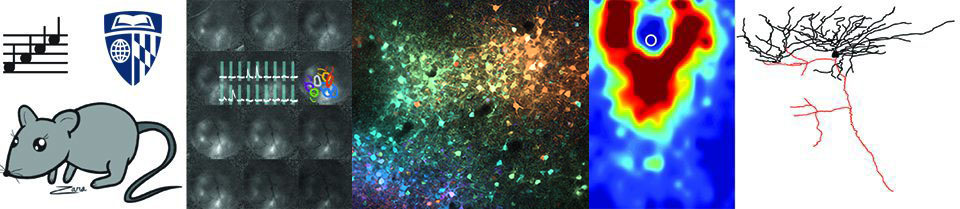
Didhiti and Chih-Ting thus tested whether pup vocalizations are linked to activity in the auditory cortex. Using imaging, they found that the auditory cortex was activated during vocal bouts. This also happened in deaf pups, indicating that “hearing” is not required.
They then identified areas in the frontal cortex (ACC/M2) that were activated whenever the pups vocalized and that these areas projected to the auditory cortex. Silencing these areas abolished vocalizations and the vocalization-related activity in the auditory cortex.
We propose that this pathway may help prepare—or “prime”—auditory cortex before reliable sound-driven input becomes available. For example, it could influence the synaptic maturation of developing auditory circuits.
Thus our data indicate that early actions, in this case vocalizations, influence the neural activity of the developing sensory cortex and thereby might be able to shape development.
Read here in Science Advances
